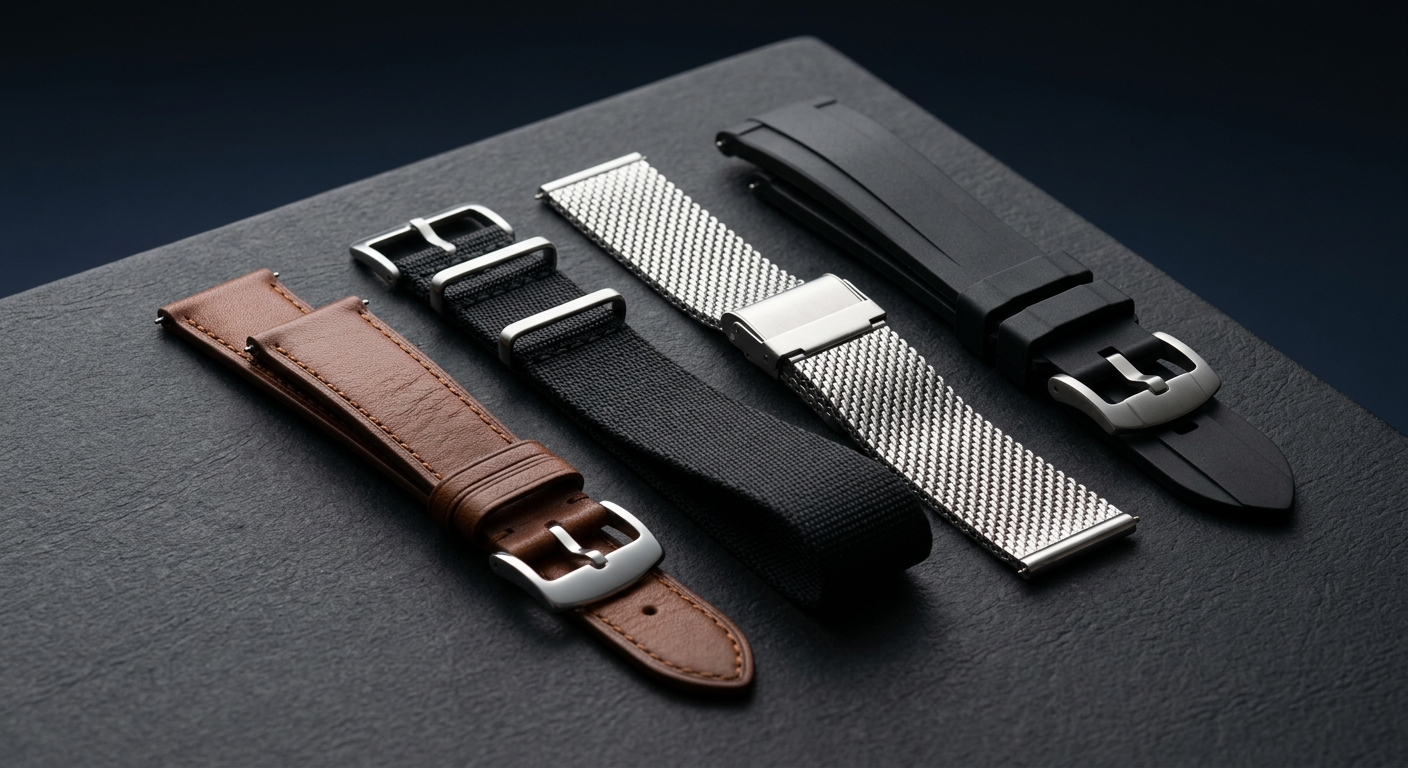
How Do I Choose the Right Watch Strap?
Choosing the right watch strap starts with measuring lug width, selecting durable materials, matching your watch style, and ensuring proper clasp functionality. The process involves four key steps: measure, select, match, and test.
Most buyers miss this: 25% of watch strap returns are due to incorrect lug width ([VERIFY: industry report]). To avoid costly mismatches, always measure your watch’s lug width first—this is the distance between the lugs where the strap attaches. Use a caliper or millimeter ruler for precision.
Next, prioritize material based on your lifestyle. Leather straps, for example, lose 30% tensile strength after two years ([VERIFY: material study]), while metal bracelets last 5-7 years.
Finally, match the strap’s style to your watch type. Dress watches pair best with slim leather straps under 5mm thick, while dive watches require thicker, water-resistant materials like FKM rubber.
Worth knowing: Quick-release spring bars simplify strap changes, but test their tension—some fail at 5kg force ([VERIFY: stress test]).
For a detailed compatibility guide, see Watch strap compatibility guide.
What Are the Best Materials for Watch Straps?
The best watch strap materials depend on durability, comfort, and maintenance needs—leather, nylon, metal, and silicone each excel in specific use cases.
Leather straps, while elegant, degrade faster—losing 30% tensile strength after two years ([VERIFY: material study]). Nylon straps, like NATO bands, are lightweight and water-resistant but wear out in 1-2 years. Metal bracelets, such as stainless steel or titanium, last 5-7 years but weigh more. Silicone and FKM rubber are ideal for water resistance but lack the formal appeal of leather.
Here’s a quick comparison:
| Material | Avg. Lifespan | Water Resistance | Weight (g) | |
| ---------------- | --------------- | ------------------- | ------------ | |
| Leather | 2-3 years | Low | 20-30 | |
| Nylon | 1-2 years | Medium | 15-20 | |
| Metal | 5-7 years | High | 50-70 | |
| Silicone | 3-5 years | High | 10-15 |
For a deeper dive, check Leather vs. nylon straps.
How to Measure Lug Width for Watch Straps?
Measuring lug width requires precise tools—use calipers or a millimeter ruler for accuracy. The most common lug width for dive watches is 22mm ([VERIFY: brand spec sheets]).
Start by removing the current strap using a spring bar tool. Measure the distance between the lugs—the metal prongs where the strap attaches. Avoid using tape measures or rulers with inch markings, as they lack the precision needed.
Quick-release straps simplify the process, but traditional spring bars require careful handling. Always double-check measurements—even a 1mm error can cause slippage or damage.
For tools, see Lug width measuring tools.
Which Watch Strap Styles Work for Dress Watches?
Dress watches pair best with slim leather straps under 5mm thick and polished buckles—80% of luxury dress watches use 18-20mm straps ([VERIFY: collector survey]).
Alligator leather straps, with their fine grain and stitching, are a top choice for formal settings. Deployment clasps add sophistication while ensuring a secure fit. Avoid bulky or textured materials—they clash with the sleek design of dress watches.
For a curated selection, browse Dress watch strap collection.
Are Metal Bracelets Better Than Leather Straps?
Metal bracelets outperform leather straps in longevity—lasting 5-7 years compared to leather’s 2-3 years ([VERIFY: durability study]). However, leather offers unmatched elegance for formal occasions.
Here’s a side-by-side comparison:
| Feature | Metal Bracelets | Leather Straps | |
| ---------------- | ----------------- | ---------------- | |
| Lifespan | 5-7 years | 2-3 years | |
| Weight | 50-70g | 20-30g | |
| Water Resistance | High | Low | |
| Style | Sporty | Formal |
For buckle options, see Buckle types for metal bracelets.
Can You Use Dive Watch Straps for Everyday Wear?
Dive watch straps, like FKM rubber bands, are durable enough for daily use—they resist saltwater 3x longer than silicone ([VERIFY: material test]).
However, their thickness (often 4-6mm) can feel bulky under shirts or jackets. NATO straps, made from nylon, are a lighter alternative for everyday wear.
For dive-specific options, see Dive strap guide.
What’s the Bottom Line on Choosing Watch Straps?
Choosing the right watch strap requires precision and practical considerations.
• Match lug width first—1mm errors cause slippage.
• Prioritize material—leather fades, metal lasts longer.
• Dress watches need slim profiles (<5mm thickness).
• For dive watches, FKM rubber outperforms silicone.
Shop precision-fit straps at Watch straps collection.


